
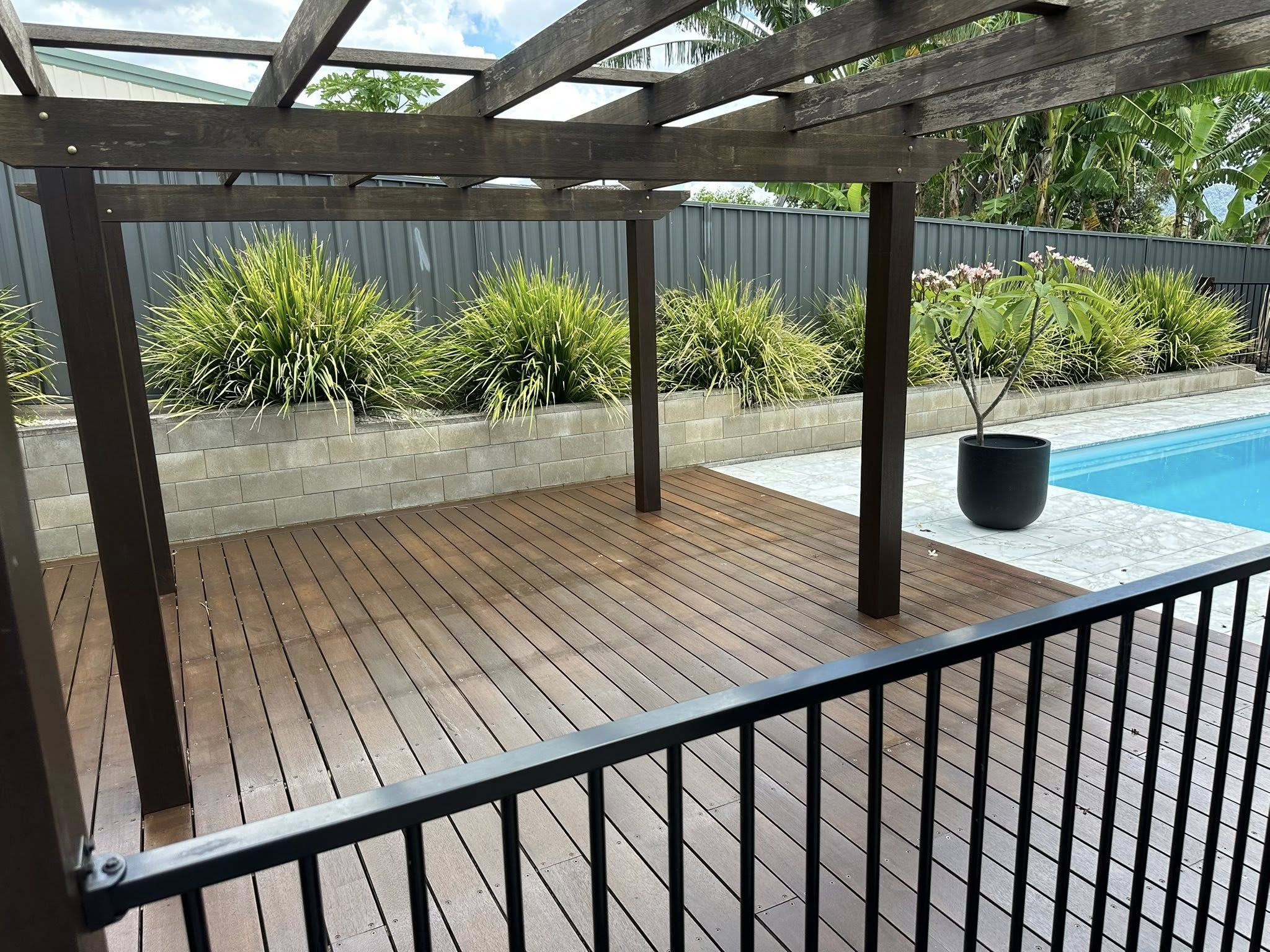
Deck Painting in Newcastle NSW
Decks are the part of a Newcastle home most owners keep meaning to fix and never quite do.
Until it gets worse. The salt air, the UV, the rain cycles: all three eat into untreated wood faster than people expect, and an exterior deck that was fine two summers ago can be grey, splintery, and underfoot-dangerous by the third. Quality deck painting on Newcastle decking starts with proper prep, the right wood finishes for the species, and a coating system built for coastal exposure.
Got more than one job in mind?
Plenty of Newcastle homes need a couple of things done at once, like interior and exterior, or a roof and gutters together. We quote it as one job, so you get one clear written price from your local painter in Newcastle.
When the Timber Deck Needs Doing
Timber decks rarely fail in one hit. They fail in stages, and most owners only notice the last stage. Here is what to look for, in roughly the order it shows up.
Grey or silvery boards. The original coating is gone. Once the timber is exposed, water gets into the grain and the boards start moving. Recoat now and you save the timber. Wait another year and you might be replacing boards.
Cupping or splitting. Edges of the timber boards lift. The surface stops being flat. At this stage some boards still hold a new finish and some need to come out and be replaced. We sort that on the inspection.
Old coating peeling in patches. Means the previous job was rushed, the wrong product, or both. There is no clean touch-up here. The full deck has to be stripped back to bare timber and recoated, otherwise the new finish lifts off the old failure within a season.
Mould, algae, black staining. Common on timber boards in shaded corners or where water pools because of poor drainage. A biocide wash kills it at the root. Coating without that step locks the mould in and it eventually pushes the new paint off the boards.
Soft, springy, or visibly rotted boards. Stop reading this list and book an inspection. Soft timber is a structural issue, not a paint problem. We will tell you which boards need replacing before any coating work happens.
Why Wood Decks Need Specialist Treatment in Newcastle
Not all timber deck boards are the same, and not all wood finishes work on all species. Hardwood decking, including spotted gum, blackbutt, and merbau, is dense and naturally oily. That means the wood needs specific primers or preparation steps before a topcoat will bond properly. Softwood boards like treated pine are more open-grained, which means they absorb product faster and can look patchy if the first coat is not applied correctly.
Newcastle's coastal climate adds another layer. Exterior decks face UV from the north, salt air from the east, and high humidity through summer. The combination accelerates coating breakdown compared with inland properties. A finish that holds for five years on a sheltered deck in a western suburb might need recoating in three years on a coastal block in Redhead or Merewether.
Timber species, board condition, deck orientation, and exposure all feed into the product selection. We specify Dulux timber deck coatings appropriate for the species and exposure on your site. Using quality wood finishes built for your specific decking is not an upsell. It is what makes the job last.
How a Deck Job Runs
Four-stage job. Skip a stage and the finish does not last.
We start with an on-site inspection. Walk the deck, check every board, look at the joists and bearers from underneath where access allows, and write a quote that includes any board replacement and any structural repair you need before paint. If a board is unsafe, you hear about it then, not later.
Prep is the heaviest stage. Deck cleaning starts with pressure cleaning to strip dirt, algae, and loose coating, washing the wood back to a sound surface. Mould treatment if there is any. Deck sanding or light grinding where the timber is cupping or where old coating is flaking off, so the new finish has somewhere to bond. Replacement boards installed and prepped at the same time. All raised-deck work follows SafeWork NSW working-at-heights guidance.
Coating is where the look gets locked in. Stain shows the wood grain and looks natural. Needs recoating every two to three years on Newcastle coastal exposure, faster than inland. Solid-colour exterior painting hides species variation and board damage, holds longer between recoats, often three to five years. Two coats either way, both UV-rated for Australian timber.
Then clean-up. Drop sheets up. Hardware reinstalled if we removed any. Care sheet handed over: cleaning cadence, when to expect a refresh, what cleaning products to avoid on the timber boards.
Weather is the limit. Timber boards need to be dry before the first coat and there needs to be a clear window between coats. We will not paint into rain or onto a damp deck.
Timber Deck Restoration vs a Simple Recoat
A recoat is straightforward: the existing coating is sound, the timber boards are flat and dry, and the job is wash, sand lightly, and apply fresh product. It is the best-case scenario and it does happen.
A full restoration is different. The old coating is failing, some boards are cupped or damaged, and the deck needs to be stripped back before anything new goes on. This is the common situation on Newcastle decks that have been through a few seasons without maintenance. The restoration process takes longer and costs more, but the alternative is coating over a failing surface and watching the new finish peel within a year.
On a restoration job, we replace individual boards that have failed rather than the whole deck floor. That decision is made board by board on the inspection, not as a blanket call. Most timber decks have a mix: some boards are fine, some need a sand, a few need replacing. Pricing reflects that actual scope, not a flat rate.
Deck Maintenance Between Recoats
Deck maintenance is what keeps a quality finish looking right between full recoats. A light wash once or twice a year clears the salt film, leaf litter, and grime that accelerate coating breakdown if left to sit on the wood.
Gentle pressure cleaning on a low setting is fine on solid-paint decks. Stained decks prefer a soft-bristle deck brush, mild detergent, and a hose rinse rather than high pressure, which can lift the finish on softer wood. Avoid harsh chlorine cleaners on the boards. They strip the colour and dry the wood out.
Spot-touch any chips or scratches as soon as you notice them. Water finds bare wood quickly on an exterior deck, and small fixes done early are the difference between a recoat in three years and a full restoration in five. Regular maintenance is the cheapest part of owning a painted timber deck.
Deck Painting Cost in Newcastle
Pricing moves with size, timber species, current condition, board replacement, and coating system. A small entertainment deck in good nick costs nothing like a 50 sqm wraparound that has been let go for a decade. Stain versus solid paint changes the number. Handrails, balustrades, and step risers in scope versus deck-floor only changes the number.
After the walk-through you get a written itemised quote covering prep, replacement timber boards, and the coating system. You get a firm written figure after a site visit, and it holds once the job is on.
Why Hughesys for Deck Painting
Licensed (Lic. 476719C). Jye-led. Every deck gets a proper inspection, written quote, timber-specific product spec, and prep that is not skipped. Jye built Hughesys around that standard because those two things, product selection and preparation, are why most deck jobs fail and why ours hold up.
Five-star Google reviews from Newcastle and Lake Macquarie homeowners, with the reviews specifically mentioning the prep work and the care taken with timber surfaces. On deck work, that is the whole game.
Questions about deck painting in Newcastle
How long does deck painting take in Newcastle?
A standard residential timber deck, washed, sanded, two-coated, runs over a few days. Bigger decks, decks needing board replacement, decks with handrails and balustrades all take longer. Weather can push it because coating needs dry timber boards.
Stain or paint?
Comes down to the look you want and the condition of the boards. Stain suits decks in good shape because it shows the timber grain. Solid paint hides board damage and species variation, lasts longer between recoats. We talk it through on the inspection.
How often does a Newcastle deck need recoating?
Coastal timber decks are harder on coatings than inland ones. A penetrating stain wants recoating every two to three years. Solid paint holds three to five, depending on exposure and how much the deck gets used.
Do you replace rotten boards as part of the job?
Yes, where the replacement is in the quote. Rot or softness gets flagged on inspection and priced in writing. We are not coating over a timber board that is unsafe.
What about handrails, posts, balustrades?
All of it gets done as part of a full refurb if you want it. Same product system across the deck floor and the rails so the colour reads consistently across all timber surfaces.
How much does deck painting cost in Newcastle?
Depends on deck size, timber condition, board replacement, and coating system. After the walk-through you get a written itemised quote before any work starts.
Other painting work we do in Newcastle
Exterior Painting Newcastle
Weatherboards, render, and brick exteriors built for Newcastle coastal weather.
Fence Painting Newcastle
Timber, Colorbond, and rendered fences across Newcastle suburbs.
Roof Painting Newcastle
Tile, Colorbond, and metal roofs across Newcastle and Lake Macquarie.
Painters Warners Bay
Deck, exterior, and fence painting around Warners Bay.
Ready for your free deck painting quote?
Tell us about the job. We visit the property, check every surface, and get a written number back to you. The quote is free, and the decision stays yours.